

The True Nature of Chicken Road and How the Crossing Risk Game Functions
I view Chicken Road as one casino game, not as a casino brand. That distinction matters because the word “slot” in the title can set the wrong expectation. What I https://www.goal.com/en-ke/betting/bc-game-app/blt98990ce14b91c669 find is a road-crossing risk game with a chicken, traffic, and a multiplier ladder instead of spinning reels. The gamble feature is the choice to cash out or take one more lane, and that decision drives the whole game. I describe how it plays, what RTP and volatility mean here, how the multiplier and max win work, what bet ranges to expect in pounds, and how UK players can approach the risk without treating it like a payline slot. I also highlight what to check in the game’s own rules, because exact settings can vary by build. That is not a technicality. It changes how I assess every bet.

The round flow is easy once I abandon looking for slot mechanics. I pick a stake, press start, and watch the chicken move lane by lane. The multiplier usually rises with each safe crossing, while a car ends the round and takes the staked amount. If I collect before a collision, I collect the stake multiplied by the current step. Some builds add difficulty settings or an auto-cash-out target, so I check those before playing instead of finding them mid-run. There are no free spins, wilds, scatters, or a separate bonus wheel in the classic version I assess. The multiplier ladder is the feature. I check the game info screen for the exact lane structure, maximum multiplier, and any optional risk controls. I also check whether the stake is lost on a collision or whether an insurance-style option exists.
Theme, Display and Why the Game Label Can Mislead
The theme is the draw: a chicken dodging traffic across a road, with arcade-style graphics and quick rounds. The presentation are clear enough to see on a phone, which is important because the cash-out decision needs to be easy to access. The visual humour softens the risk, but it can also make the game seem lighter than it is. The slot label in the title is a lobby tool, not a description of the mechanics. When I see Chicken Road filed under slots, I still check for reels, paylines, wilds, scatters, and free spins. In the classic risk-game build, those features are not present. The multiplier ladder and the traffic hazard are the real component set, and the theme makes that loop memorable. That is why I judge it on its own terms, not against a five-reel slot.
The slot label can deceive in another way. It makes players expect a fixed bet range, a paytable of symbol combinations, and bonus rounds triggered by scatters. Chicken Road gives me a single risk decision applied across lanes, so the important numbers are the multiplier steps, the collision risk, and the maximum payout. I search for the game’s own help screen, not a generic slot description. If a setup does add slot-style extras, I want to see them recorded in the rules before I view them as part of the game. The theme and the label are advertising. The mechanics are what I actually play. Keeping that separation clear prevents me from overpaying for a element that is not there. I would choose to know the real loop than go after a bonus that belongs to a different type. That spares time and money.
How to experience Chicken Road Gradually Without Overcomplicating It
To experience Chicken Road, I start the game and read the rules panel before making a stake. I need to understand the lane structure, the multiplier steps, the maximum payout, and if an auto-cash-out or difficulty option exists. Then I pick a stake within my session budget and click start. The chicken moves automatically. My job is to watch the multiplier and determine when to cash out. If a car collides, the round ends and the stake is lost. If I cash out, the winnings are awarded according to the current multiplier. There are no paylines to choose and no spin button to click repeatedly, so the learning curve is about risk control, not symbol combinations. I test the controls in demo mode first if I have not played the build before. That clears any doubt about where the cash-out button sits.
My practical routine is to start with a low stake and a modest cash-out target, then increase neither until I have seen several rounds. I skip changing the target mid-run because that is usually emotion talking. If the game offers auto-cash-out, I configure it to a multiplier I would be content with, not the highest number on the ladder. I also verify whether the stake is subtracted at the start or only when the round completes, because that influences how I monitor my balance. The best way to understand the rhythm is to observe a few complete rounds without betting, then wager small. Chicken Road rewards patience more than speed, even though the arcade presentation makes it seem fast. I hold a note of my cash-out points so I can know whether my decisions are consistent. That is more helpful than remembering only the wins.
Stake Range, Maximum Win and Game Session Planning for UK Players
The stake range is the essential connection between the risk game and my funds. Chicken Road variants commonly offer a low minimum stake in cents and a significantly higher maximum, with the exact figures shown in the game interface and rules. I review the span in pounds before I start, because a win multiplier that appears generous at a large wager can be uncomfortable at a low stake. The top payout is commonly expressed as a fixed multiplier, not a accumulating jackpot, so there is no growing prize pool to go after. I check the cap in the paytable and consider it as the outer limit of the game’s maximum. If the specific ceiling is not visible in the lobby, I do not guess a figure. I view the terms screen and read the maximum win clause before betting. That is quick.
Session strategy carries more weight here than in a low-volatility slot because the cash-out decision is repeated so often. I set a session budget that I can lose without harming other areas, then divide it into small bet amounts so a poor run does not cause a drastic change. I also determine a time cap and a payout target for the playing session, not just for each round. The top payout is not a justification to continue playing. It is a uncommon limit. UK players are advised to use deposit restrictions and time reminders where offered, and should view the game as entertainment instead of a method for consistent profit. I prefer short sessions because the multiplier ladder is exciting and can make me overconfident after a few good withdrawals. A written plan is unexciting, but it prevents the risk feature from becoming mindless.
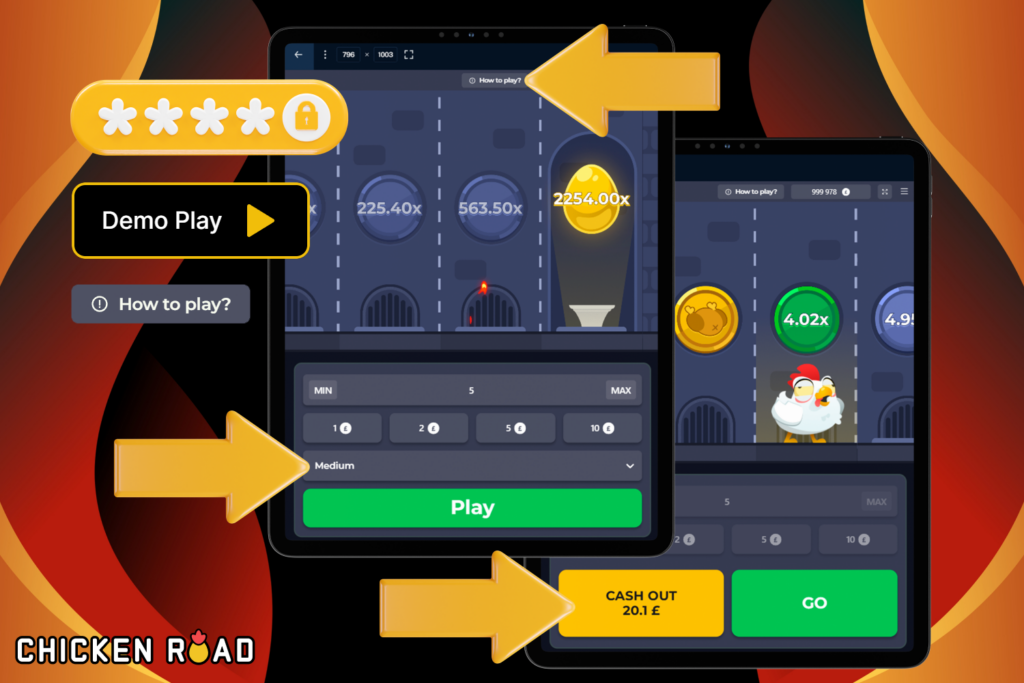
The Gamble Feature Explained: Cash Out or Risk It
In Chicken Road, the gamble feature is the collect-or-risk decision, not a distinct double-or-nothing mini-game. Every safe lane is a gamble. I can secure the current multiplier or gamble for the next step. That design is more transparent than a hidden bonus trigger because I see the trade-off on screen. If a build adds a separate gamble button after a win, I treat it as an extra layer of risk and review the rules before pressing it. The core skill is not prediction. It is choosing how much of the multiplier ladder I am willing to expose to the next car. I use a pre-set cash-out point so the decision is made before the pressure rises. That habit does more for my discipline than any pattern-spotting theory. It also makes the risk game easier to analyze afterwards.
I use the gamble feature with a few practical habits. I set a multiplier target that matches my stake and bankroll, then cash out when it appears. I do not move the target because a run feels hot. I also use auto-cash-out where the build offers it, which removes the temptation to hesitate. I stop after a fixed number of rounds or a loss limit, because the cash-out choice can encourage chasing. The feature is exciting because it is risky, so I do not pretend it is a skill game with a guaranteed edge. UK players should check whether the gamble option is available in their chosen build and whether it changes the stake or only the winnings. The rules panel answers that faster than any forum post. I also avoid increasing my stake after a cash-out just because the feature felt rewarding.
Chicken Road title RTP, Risk level and What the Risk Profile Indicates
RTP is the first number I check. It tells me the long-run return designed into the game, not what I should expect from one session. The number I seek is displayed in the game’s info panel. For this type of risk game it often sits in the high 90s, but I do not rely on a lobby headline. I open the in-game info panel and view the figure associated with the exact build. The house edge is the gap between that RTP and 100%, and it applies across many plays. Volatility is significant in practice because the cash-out decision creates a wide spread of outcomes. Short runs return small amounts. Deep runs are infrequent and can vanish on the next lane. I judge the game on that risk profile, not on a single lucky screenshot. A high RTP does not remove the chance of forfeiting the stake on any given run.
Volatility has a practical effect on stake size. If I pursue the top multiplier every round, Chicken Road app install, I am selecting the most volatile way to play and ought to anticipate long losing sequences. If I collect after one or two safe lanes, I smooth out the swings but also limit the upside. That does not affect the RTP. It alters the shape of my results. I prefer to set a target before the round and cash out when the multiplier hits it, instead of choosing emotionally after a near miss. UK players ought to view the max win as a maximum, not a plan. The game can offer a large multiplier, but the probability of achieving it is low and the next lane always bears risk. I also hold session length short enough that variance does not cloud my judgement.
UK Player Verification, Impartiality and Responsible Risk
For UK players, the sensible checks are inside the game and the account tools around it. I confirm the declared RTP, the max win limit, the stake range in GBP, and the exact rules for the gamble option before I stake. I also review whether the game is authorised https://www.reddit.com/r/poker/comments/25xml7/classic_tuff_fish_video_510_games_online_at_party/ for the jurisdiction I am in and whether the operator shows clear responsible-gambling links. I read the help screen for the crash rules, the withdrawal timing, and any auto-withdrawal limits, because those details decide how the risk truly functions. I do not depend on images or forum claims for RTP or max win. If a release looks different from the version I am familiar with, I consider it a new game and re-examine the rules. That habit takes a minute and prevents expensive assumptions. It also ensures my evaluation accurate and helpful.
I treat safe risk as a component of the game, not a notice added at the end. I set a loss limit before the opening round and quit when it is reached, because the payout cycle can make a loss-making session feel recoverable. I maintain bets modest enough that a crash does not change my mood or my funds. I employ time reminders and deposit caps where the operator offers them, and I steer clear of playing when I am tired or trying to win back a past loss. The gamble function is exciting, but it is still a risk choice with a negative expected value over time. I do not chase the max win, and I do not treat a extended run as proof of skill. UK players should read the game rules, use the safer-gambling features, and cease when the enjoyment ends.